Cooperative Horsemanship™
Philosophy
PATIENCE:
Instructor: The Instructor needs to appreciate where the rider and horse are at each lesson and not just operate by a pre-conceived lesson plan. The instructor should have an objective and goal, but read and listen to the students (horse and rider) on that day. They need to move forward, but in realistic increments so that they both understand and enjoy their progress and each other. The instructor is there to have patience with his students and to ensure progress with understanding, calmness, and enjoyment.
Rider/ Handler: Have patience with yourself. You are getting better no matter how small the increments. There is no limit to how far you can go as long as you give yourself a break. Allow yourself to move forward at your pace and enthusiastically enjoy the journey. Issues come up again and again, but we get better at solving them. For example, a horse is always spooky by nature. As we learn to communicate to the horse, the horse learns to become calmer and trust we shall take care of her. This is the same as a mother with her child or a friend who listens to us and lends her support. Always remember- “you can not do anything wrong; you can only say something different than you intended!”
Horse: Allow your horse to feel good and cooperate with your riding or groundwork. Stretch your horse first the same as you would before playing any sport. Stretch your horse statically and dynamically; don’t just run him in circles. By utilizing Dynamic Stretching exercises, your horse becomes more agile and can more quickly understand the lesson. You make your horse feel better! Understand where your horse is today and move him/her forward in inches, not yards, at a time. Allow your horse to enjoy the journey and feel good each time you ride or work. Finally, understand that every day is not always a good day. On those not so good days do something your horse can do and get the correct answer- your horse will love it! Getting things right is what your horse and you will remember.
COMMUNICATION, TRUST AND SAFETY:
I believe it is vitally important for people to be able to communicate effectively with their horses. This is the only way that a real bond can be created between horse and human. Horse and rider learn to trust in and have confidence in each other. When you and your horse are cooperating, you both feel calmer, and this means a safer ride for both of you. Safety for your horse and you is paramount to Cooperative Horsemanship™. I also feel that it is essential for people to learn how to implement the training techniques themselves, rather than just sending their horses away to a trainer to be “fixed.” When a rider or handler learns how to use the training principles, he/she can apply them to any situation that arises, even if it is not something that has been specifically taught in a lesson.
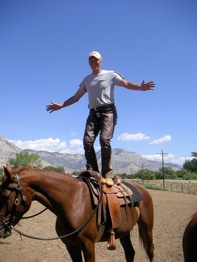
Balance is essential!
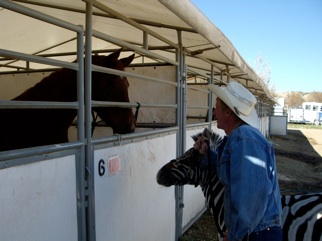
When your horse has confidence in you and you have confidence in your horse, you can handle even the unexpected things that come your way.